In this article
Where to look first, how to talk to your child, and what to do if the toy is gone for good.
It’s bedtime, and the bunny isn’t in the bed. Or in the car. Or in the bag you were sure you packed it in. If you’ve ever turned a house upside down at nine at night looking for a stuffed animal, you know the panic isn’t really about a toy. It’s about the one thing that makes a small person feel safe enough to fall asleep.
Sometimes the missing toy isn’t your child’s at all. It’s yours: the teddy bear that vanished in a move thirty years ago, the monkey you only have in one faded photo, the one you still think about more than you’d admit out loud.
This guide is for both. First, what actually works in the first hours and days. Then the online search. Then the hard part: what to do if your lost stuffed animal is gone for good. We make replicas of lost toys for a living, so we’ll tell you about that too, honestly, near the end. But first, let’s try to find it.
People don’t grieve a toy. They grieve the nights it got them through, and the person they were when they held it.
Why a lost stuffed animal hurts so much
In 1953 the British pediatrician and psychoanalyst Donald Winnicott gave this kind of toy a name: the transitional object. He called it a child’s “first not-me possession”. It’s the blanket or bear a baby picks out, usually somewhere between four and twelve months old, and leans on to cope with the gap between being held and being on their own.
It’s common. Researchers estimate that roughly 60 percent of young children in Western countries bond with a blanket or a soft toy, and the bond tends to peak around age three. Plenty of kids never pick one, and they’re fine too.
What makes these toys special is that they aren’t interchangeable. In a well-known 2008 study, psychologists Bruce Hood and Paul Bloom showed young children a “copying machine”, really a magic trick, that seemed to make a perfect duplicate of their comfort toy. Children with a strong attachment mostly wanted their original back. A few wouldn’t let their toy go near the machine at all. They weren’t attached to how the toy looked. They were attached to that one toy.
Grown-ups aren’t so different. The bear on the shelf holds a smell, a house, a grandmother, a younger version of you. So if you feel silly for being this upset, go easy on yourself. That just adds a second bad feeling to the first. You’re allowed to care.
The first 48 hours: where to look
Your best odds are in the first day or two, while people still remember seeing the toy and before lost property gets cleared out. So start close and move outward.
Retrace the day, out loud
Sit down with your child, or on your own, and walk back through the day in order: where you ate, where you stopped, where the toy was last seen for sure. Kids often remember more when you ask “where did Bunny have lunch?” instead of “where did you lose it?”. Then check the boring places. Under the car seats, the stroller basket, inside pillowcases and duvet covers, the laundry pile, behind the bed.
Call, don’t just go back
Phone every place you visited: the café, the store, the doctor’s office, grandma’s house. Describe the toy in detail, leave your number and ask them to set it aside. Staff clear out found items on a schedule, and a toy with a phone number attached to it is much more likely to survive that clear-out.
Planes, trains and hotels
Airlines, rail and bus companies and hotels all run lost-and-found desks, and most take reports online now. File one as soon as you can. Attach a clear photo and note the flight and seat, the train or route, or the room number. Then follow up. A polite second call a few days later is worth making.
Put it where locals will see it
Post in your neighborhood Facebook group, on Nextdoor and in the school or daycare parents’ chat, and tape a paper sign up near where it went missing. A photo of the toy, ideally in your child’s arms, gets far more attention than a description. Say where and when, and offer a small reward if you can. People like helping with this one.
After a few days: search online like a detective
If the toy still hasn’t turned up, the goal changes. You’re no longer only looking for your toy. You’re also looking for another one just like it.
Find out exactly what it is
Start with the label. Brand, year and style number are usually printed on the sewn-in tag, and if the tag is long gone, it may still be readable in an old photo. No tag? Try a reverse image search. Google Lens will often recognize a brand-name toy from a single clear picture, and collectors’ sites and old catalogs can fill in the rest.
Set up saved searches
Once you know the name, set saved searches on eBay, Etsy and Mercari so new listings land in your inbox. Search the way a seller would describe it, not the way you remember it: “vintage brown monkey plush 1980s” finds more than your toy’s pet name. Be patient. Discontinued toys come up for sale slowly, and the sought-after ones can get expensive.
Ask the people who do this every day
There are whole communities built for this. Plush Memories Lost Toy Search Service, run by Rosemary Bouchet, has been helping families hunt down lost lovies for more than twenty years, and its Facebook group is free to join. Groups like Lost Toy Finders take “have you seen this?” posts too, and LostMyLovey.com keeps a lost-and-found list with a “replacement wanted” section. Post a photo, the brand if you know it and a rough year.
Write to the maker
If the brand still exists, email them. Some companies keep an archive of past designs, and some know whether a line is coming back. It costs you one email.
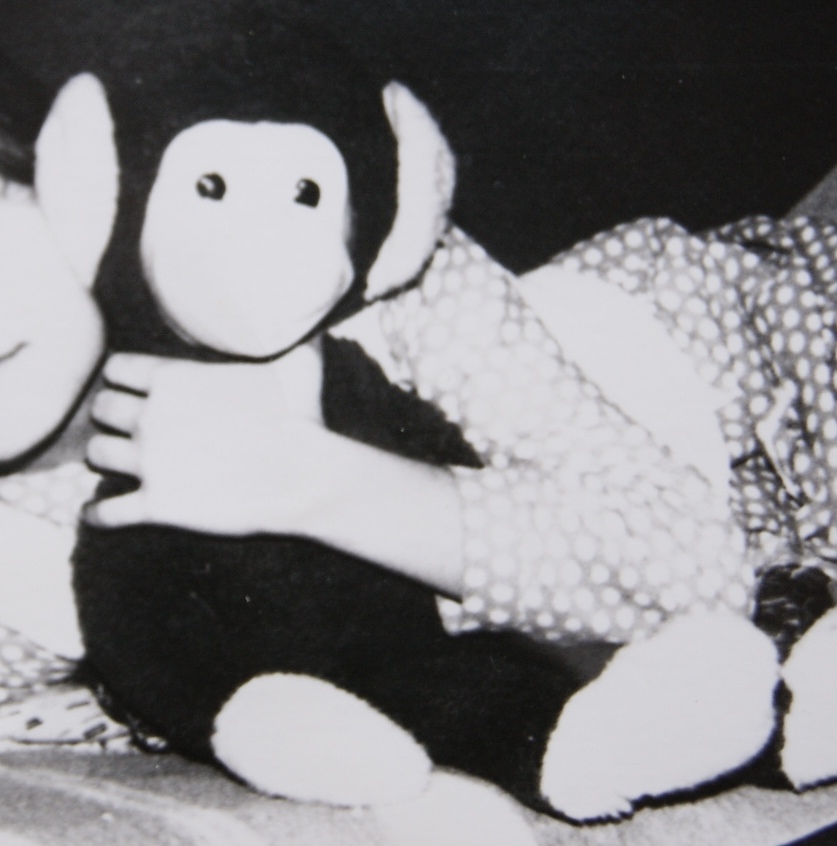
The family’s old photo of Ika, the lost monkey.
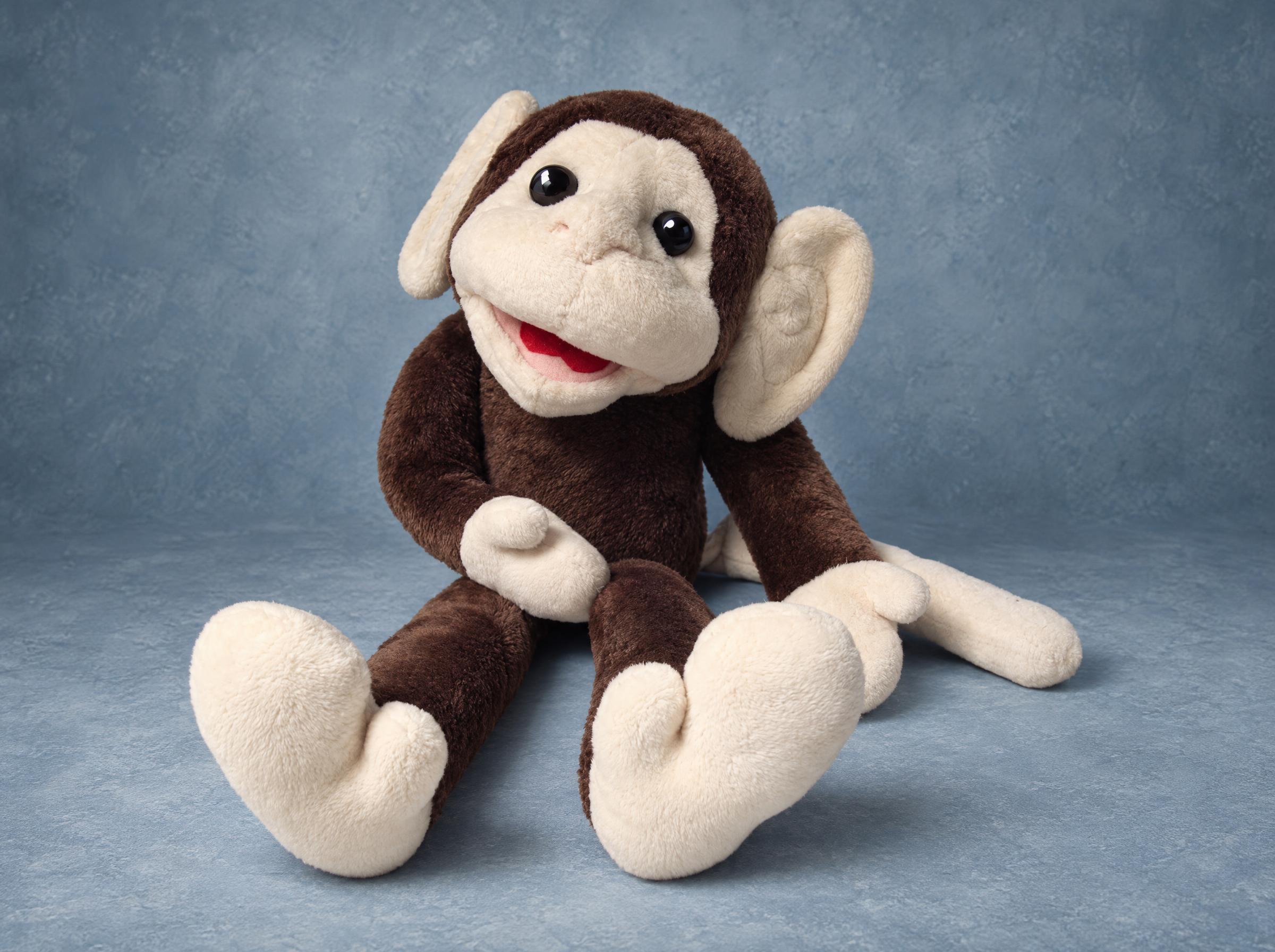
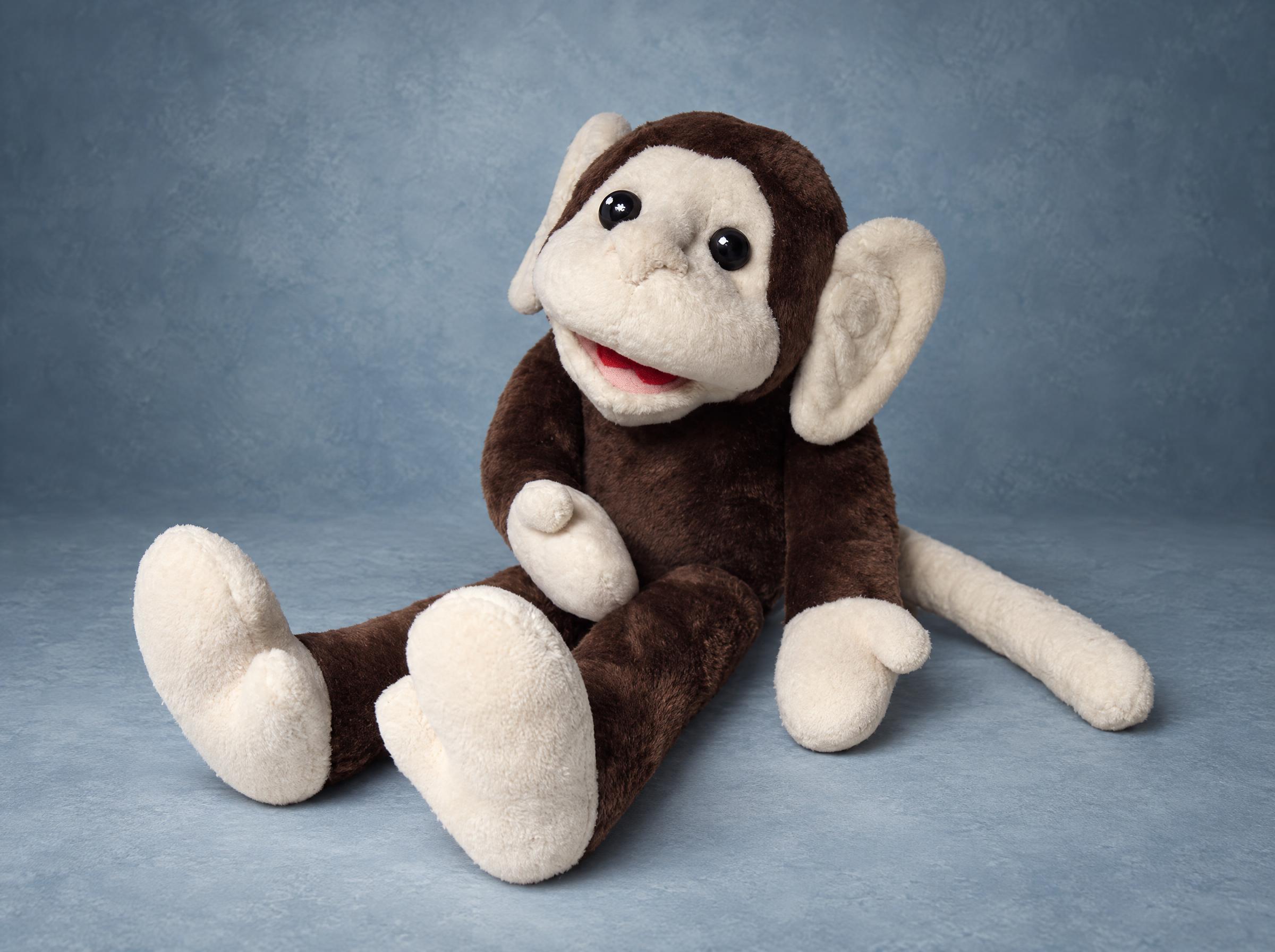
Ika again, sewn by hand from that photo and the family’s memories.
How to tell a child their toy is lost
There’s no perfect script, but a few things help.
- Be honest, in small words. “We looked everywhere and we can’t find Bunny yet” is true and kind. Children cope better with a sad truth than with a story that falls apart later.
- Let them be sad. At that age a lost comfort toy is a real loss, so skip “it’s just a toy”. Naming the feeling helps: “You miss Bunny. That makes sense.”
- Give them something to do. Drawing the toy, making a “lost” poster together or writing it a letter turns helplessness into action. Some families say the toy has gone on an adventure. That can be gentle for little ones, as long as you don’t promise it’s coming back.
- Think twice about a secret swap. If you find an identical toy, you’ll be tempted to slip it into the bed and say nothing. For some kids that works. Others notice right away, because it smells new and feels new. Remember the children in the copying-machine study. Many parents do better with the truth: “Bunny’s twin came to stay with you.”
- Protect bedtime. The first few nights are the hardest. Extra time, a favorite blanket or one of your T-shirts can help bridge the gap.
And if the toy was yours, the same rules apply. Tell someone. It isn’t childish to miss the thing that got you through childhood.
If it’s gone for good: bringing it back from photos
Sometimes the search ends without a toy. The brand closed decades ago. A grandmother made it by hand. Or it was a market toy nobody ever wrote the name of. That’s usually when people write to us.
We’re Skazkodrom, a small soft toy studio that has been sewing toys to order since 2009. Our lost toy replicas are what they sound like: a new toy, sewn by hand to look like the one you lost, made for one person and one toy. Nothing comes off a shelf.
The part people find most surprising: we don’t need the toy. We work from photos only, so a worn-out original can stay safe at home. Your pictures and your memories are enough to recreate a childhood stuffed animal.
How it works
- Send every photo you have, even old family snapshots where the toy is half hidden, and tell us the size and colors you remember.
- We send a free quote with a time estimate. Lost toy replicas start from $295.
- We ask about anything the photos don’t show, then sew the toy by hand, usually in 2–4 weeks.
- You see photos of the finished toy before it ships. If something looks off, we change it.
- We ship worldwide. Delivery usually takes 7–20 business days, longer around the holidays.
Three toys that came back
Ika the monkey, from one black-and-white photo
Ika was a little girl’s favorite monkey. The girl grew up, and somewhere along the way Ika was lost. Years later the family asked us to make her again, and all we had were old photos and what people remembered.
The best picture was small, grainy and black and white: a child in a polka-dot top hugging a dark monkey with a pale face and big pale ears. A photo like that can’t tell you what color anything was, so the family’s memories filled it in. Ika came back with a dark brown body, a cream face, big cream ears, cream hands and feet, a long cream tail and a red smile. We made her around 2011. Meet Ika up close.
A raccoon and a blue dress
This one started with a family photo of a girl in a blue dress holding a raccoon plush tight. Brown fur, a white band over a black mask, amber eyes, a pale little muzzle. The raccoon itself was long gone. We worked out its shape from that picture, matched the fur and sewed it again by hand, bushy white-tipped tail included. See the childhood raccoon.

The customer’s photo: a girl in a blue dress and her raccoon.
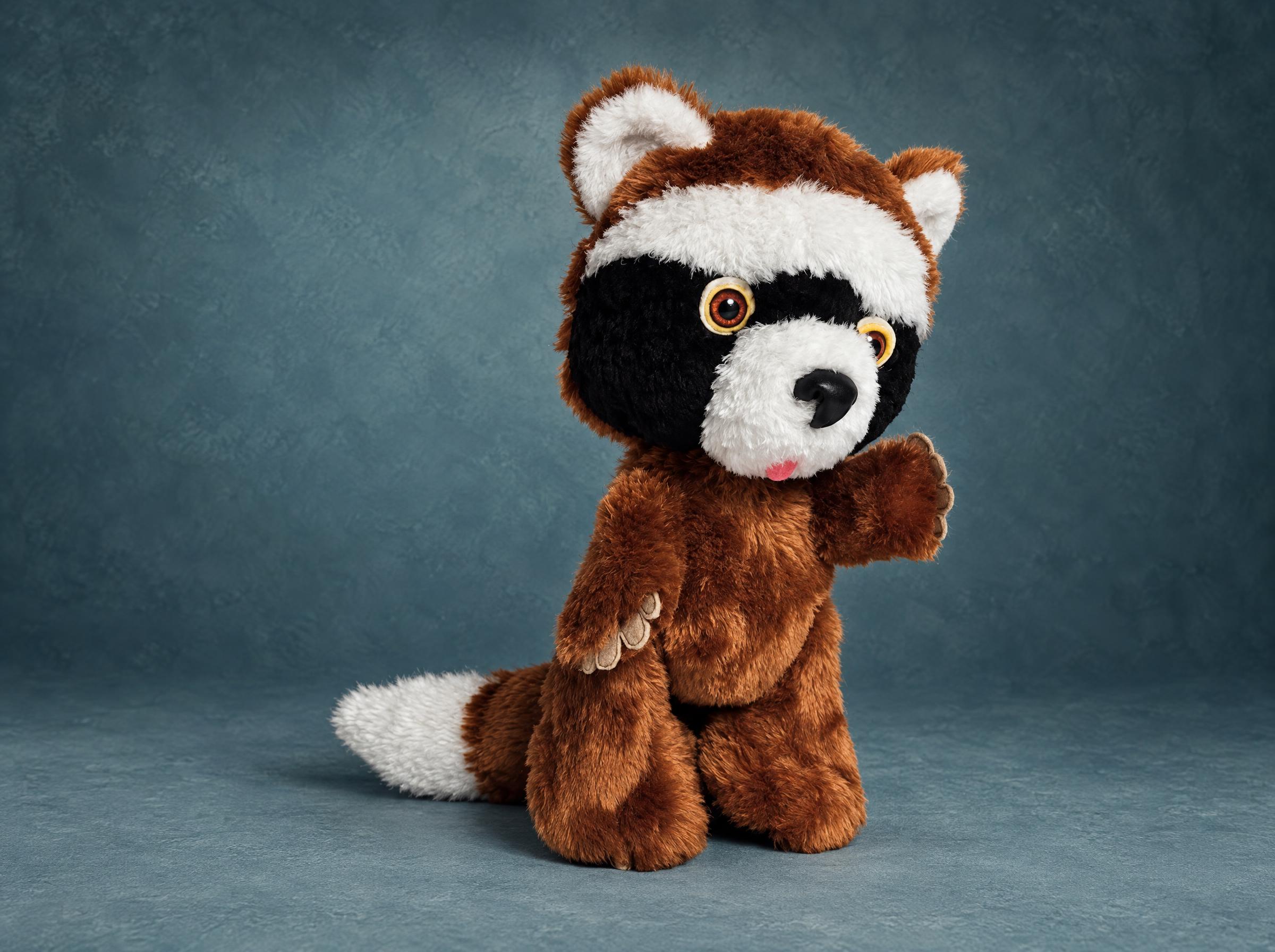
The raccoon, recreated from that one photo.
The family cat with a fish on a cord
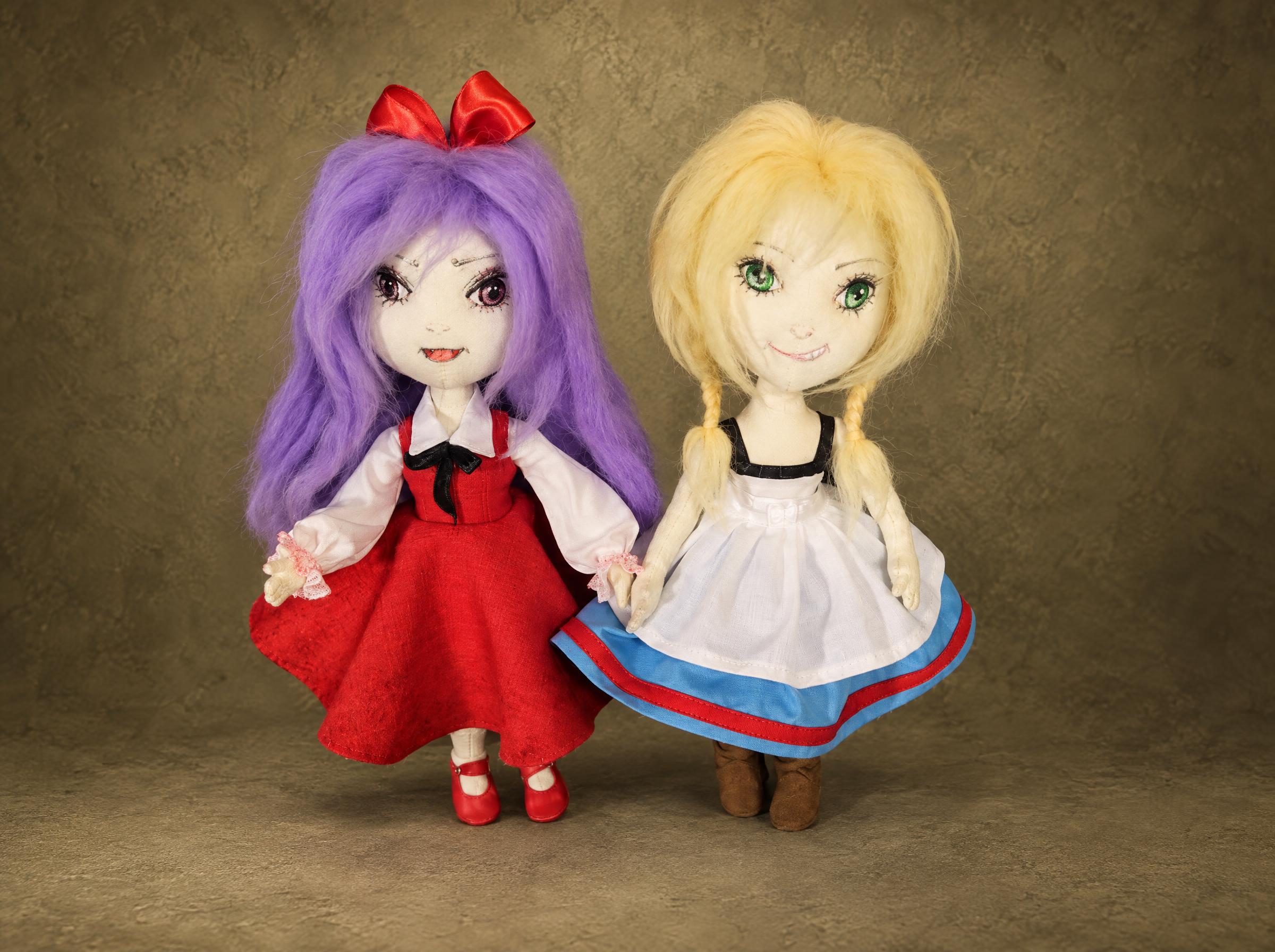
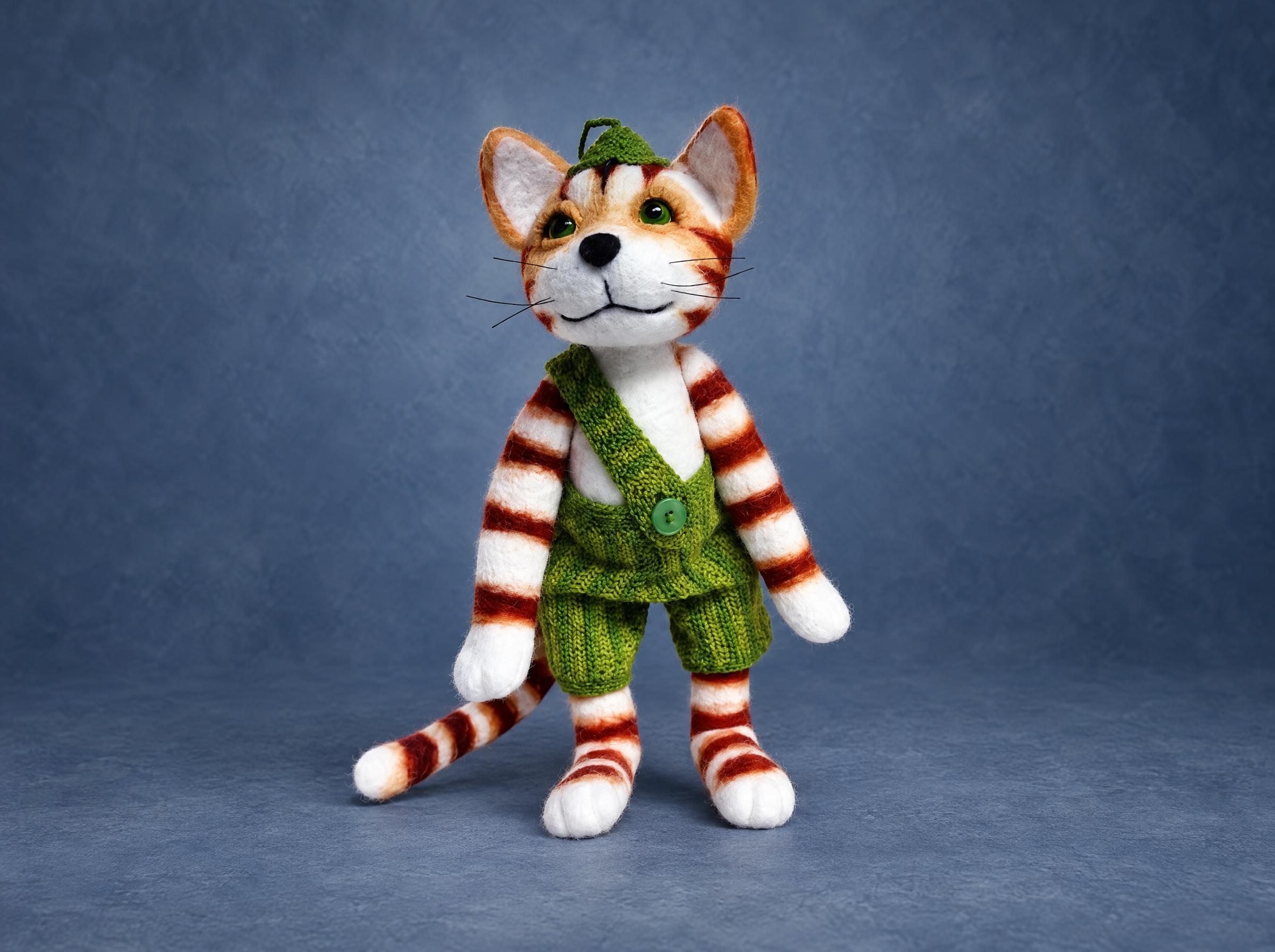
This brown cat was a lost toy the whole family knew by sight. We made a copy from their photos and took in as many of their wishes as we could: fluffy golden-brown fur, a pale muzzle and a brown nose, long whiskers, and a little fish hanging on a cord around its neck. Small details like that fish are what make a copy feel like the same toy. Meet the family cat.
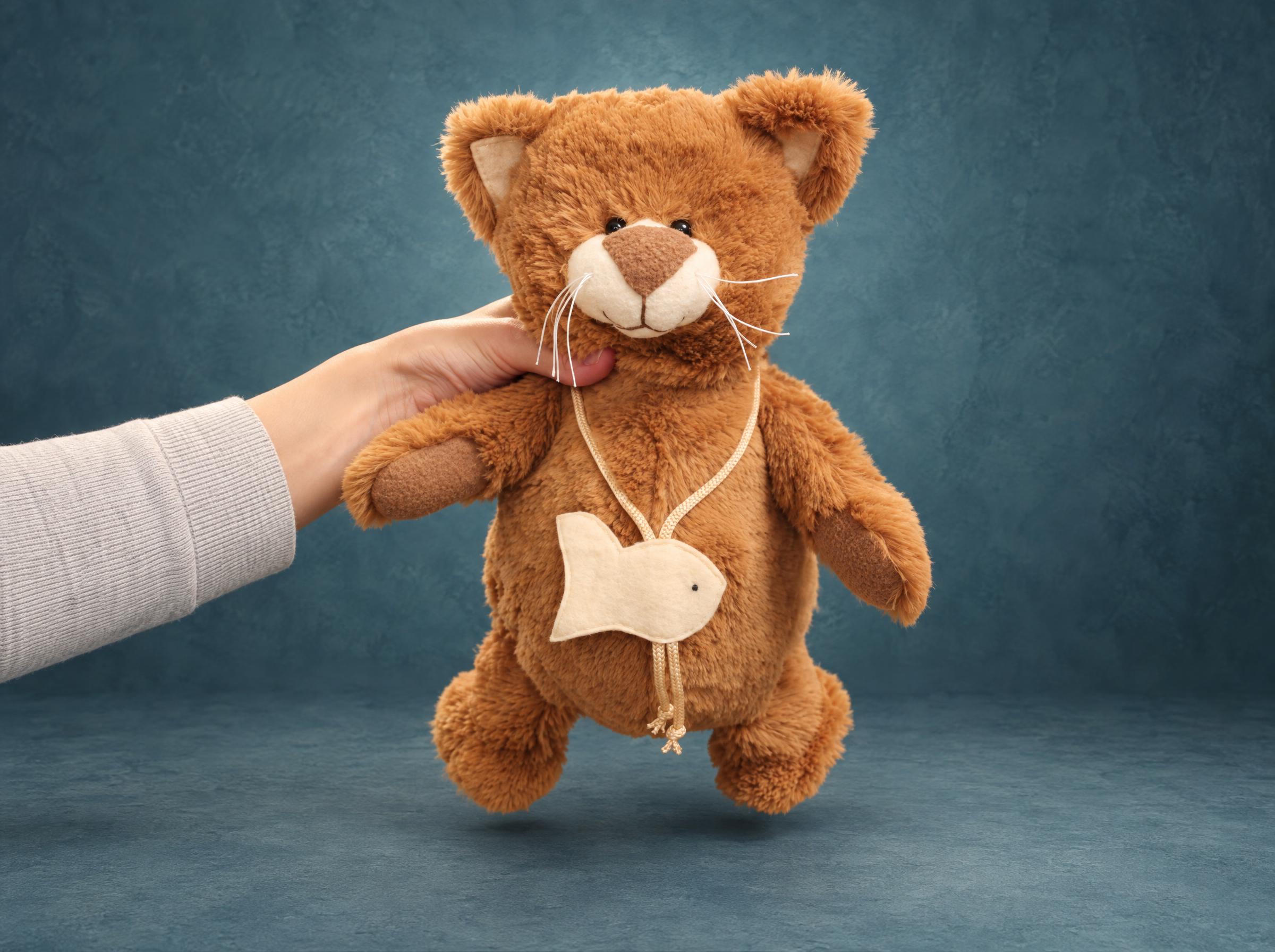
The family cat, back with its little fish.
Will a replica be exactly the same?
Honestly, no. New fabric doesn’t have thirty years of hugs in it, and an old photo never shows every side. A replica can’t be the toy you held, and we won’t pretend it is. What it can be is the moment you open the box and recognize an old friend: the same face, the same funny ears, the same weight in your arms.
That’s why you see the finished toy in photos before it ships. And if it arrives and you still don’t love it, tell us within 14 days for any reason. You get a full refund, and you keep the toy. The details are on our guarantee page.
What photos to send
- Any photo where the toy is visible, even blurry, faded or in the background
- The front helps most; add the side or back if you have them
- Close-ups of what made it yours: a stitched smile, a patch, a bow, a missing eye
- Something for scale, like a hand, a pillow or a child next to the toy
If your toy only survives in a drawing, that works too. We also turn drawings into plush toys.
So it never happens again
If your child has a comfort toy right now, ten minutes today can save you a very long night later.
- Photograph it now from the front, back, both sides and the tag. If it ever goes missing, those photos become your poster, your eBay search and, if it comes to that, everything we’d need to sew it again.
- Get a backup twin. If the toy is still sold, buy a second one and rotate them so both wear and smell the same. If it isn’t sold anymore, a duplicate can be made from photos while you still have the original to compare.
- Label it. A small sewn-in label with your phone number turns a stranger into a helper.
- Make a travel rule. Some families keep the “real” toy at home and let the twin travel. Others clip it to the backpack or the car seat.
- Think about a tracker. Some parents sew a small Bluetooth tracker into a pocket inside the toy. If you do, make sure it’s closed in tight, because the batteries are dangerous for little kids who put things in their mouths.
Questions people ask
Start close, and start fast. Search the car, bags, stroller and laundry, then call every place you visited that day and leave your number. File a lost-property report with any airline, train, bus company or hotel, and post a photo in local Facebook groups and on Nextdoor. After a few days, move online: saved searches on eBay, Etsy and Mercari, and free lost-toy groups like Plush Memories.
First find its exact name, from the tag or with a reverse image search. Then set saved searches for secondhand listings and ask in lost-toy communities. If none turns up, the toy can be recreated from photos. That’s what our lost toy replicas are: a new toy, sewn by hand to look like yours.
Usually, yes. One photo is enough to start, even a faded or black-and-white one, and several are better. Tell us the colors and size you remember, and we’ll ask about anything the pictures don’t show before we sew.
No. We work from photos only, so a worn-out original stays safe at home with you.
In most cases, yes. Many children notice a new toy right away, because it smells and feels different. A gentle truth, like “Bunny’s twin came to stay”, usually goes over better than a swap they catch later. You know your child best.
Lost toy replicas start from $295. The final price depends on the size and the details, and the quote is free. Making it usually takes 2–4 weeks, and delivery usually takes 7–20 business days, longer around the holidays.
GET A FREE QUOTE, FILL OUT THE FORM
You Take No Risks – We guarantee you love the toy or money back!
Custom toys start from $350.
A bigger size or extra details can cost more.
Why?
No ready-made pattern. Your photo or drawing doesn’t come with one. Our artist builds the pattern from scratch and turns a flat picture into a 3D toy. It’s the hardest and slowest part.
Materials picked for your toy. The right color, fur length and texture. Sometimes we order fabric just for one project.
Sewn by hand. Every piece is cut, sewn, stuffed and finished by hand. The face takes the most time: move an eye a millimeter and the character changes.
You approve it first. When your toy is ready, we send you photos. Something looks off? We fix it before shipping.
One toy, not a thousand. A factory spreads design costs over thousands of copies. Here, all that work goes into one toy: yours.
That’s why prices start at $350. And on a personal order, if you don’t love your toy, you get a full refund.

ABOUT THE AUTHOR
Hello! I’m Eliza Grace, a dedicated toy designer with over 5 years of experience in the industry. My passion lies in designing toys that captivate and inspire. Through this blog, I aim to share my knowledge and enthusiasm, helping others explore the wonderful world of toy design.
TAGS
YOU MAY ALSO LIKE
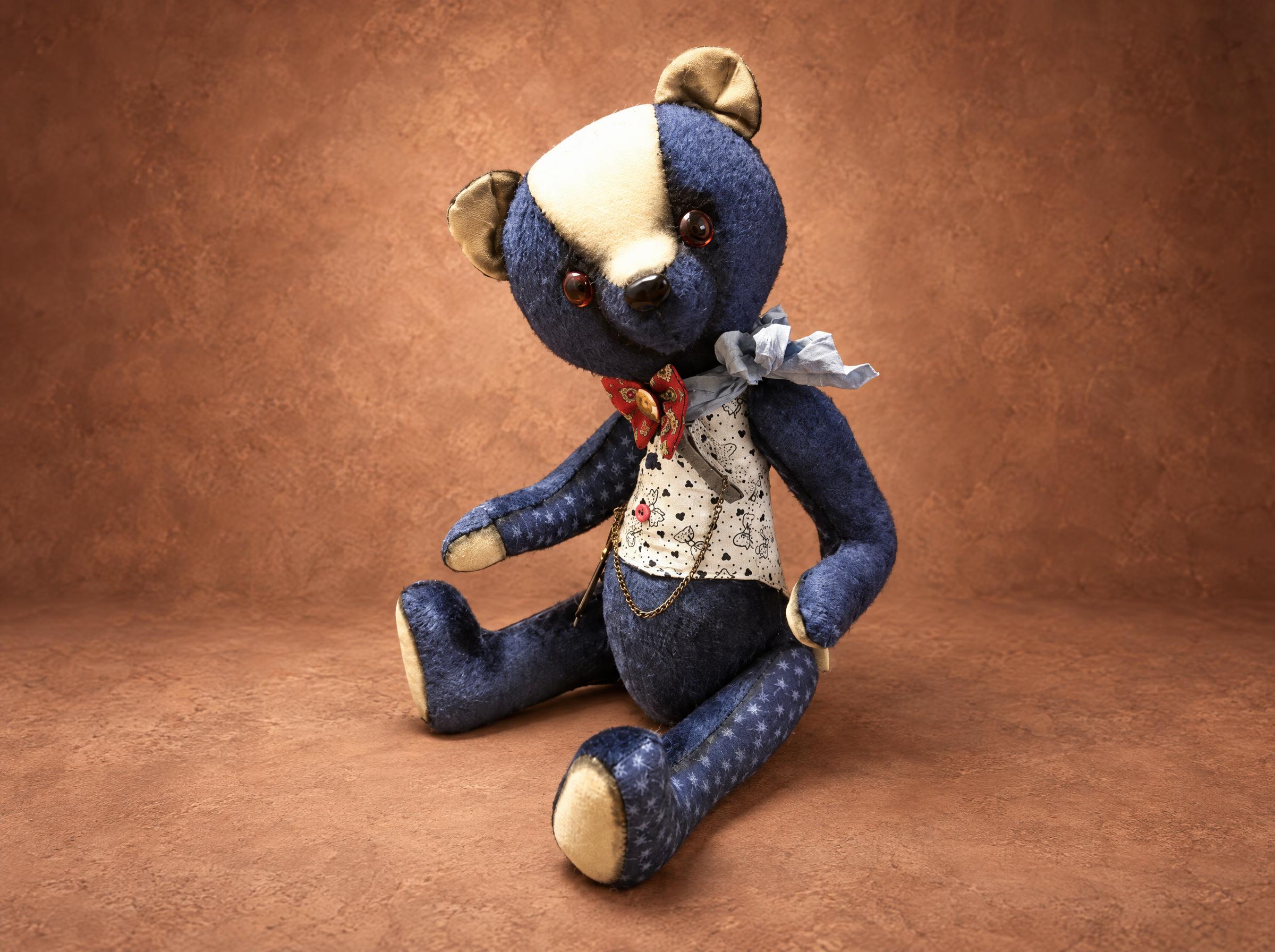
We meticulously craft toys from images, drawings, or prototypes. Just send us a picture, and we’ll bring to life a custom soft toy tailored to your exact specifications
More Toy Types Crafted by Us